

What Foods Should You Avoid While Wearing Braces?
Getting braces often comes with plenty of questions, and one of the biggest is, “What am I going to be able to eat?” The good news is that having braces does not mean giving up all of your favorite foods. However, you will need to be a little more careful about what you eat and how you eat it.
Certain foods can bend wires, loosen brackets, or become stuck around your braces. Making a few simple changes can help protect your orthodontic appliances and keep your treatment moving forward as planned.
Why Does Your Diet Matter With Braces?
Braces are designed to withstand everyday eating, but they are not indestructible. Hard, sticky, crunchy, and chewy foods can put too much pressure on brackets and wires, potentially causing damage. The American Association of Orthodontists recommends avoiding foods that can break or loosen orthodontic appliances.
A broken bracket or bent wire may mean an additional visit to your orthodontist and, depending on the situation, could interfere with your treatment progress. Food can also become trapped around brackets and wires, making it harder to keep your teeth clean.
Fortunately, you don’t have to completely change the way you eat. In many cases, it is simply a matter of choosing a softer alternative or cutting food into smaller pieces.
Foods to Avoid With Braces
The easiest rule to remember is to stay away from foods that are particularly hard, sticky, crunchy, or chewy.
Hard Foods
Hard foods can place significant pressure on brackets when you bite into them. This includes things like nuts, hard pretzels, ice, hard candy, and certain types of crunchy snacks.
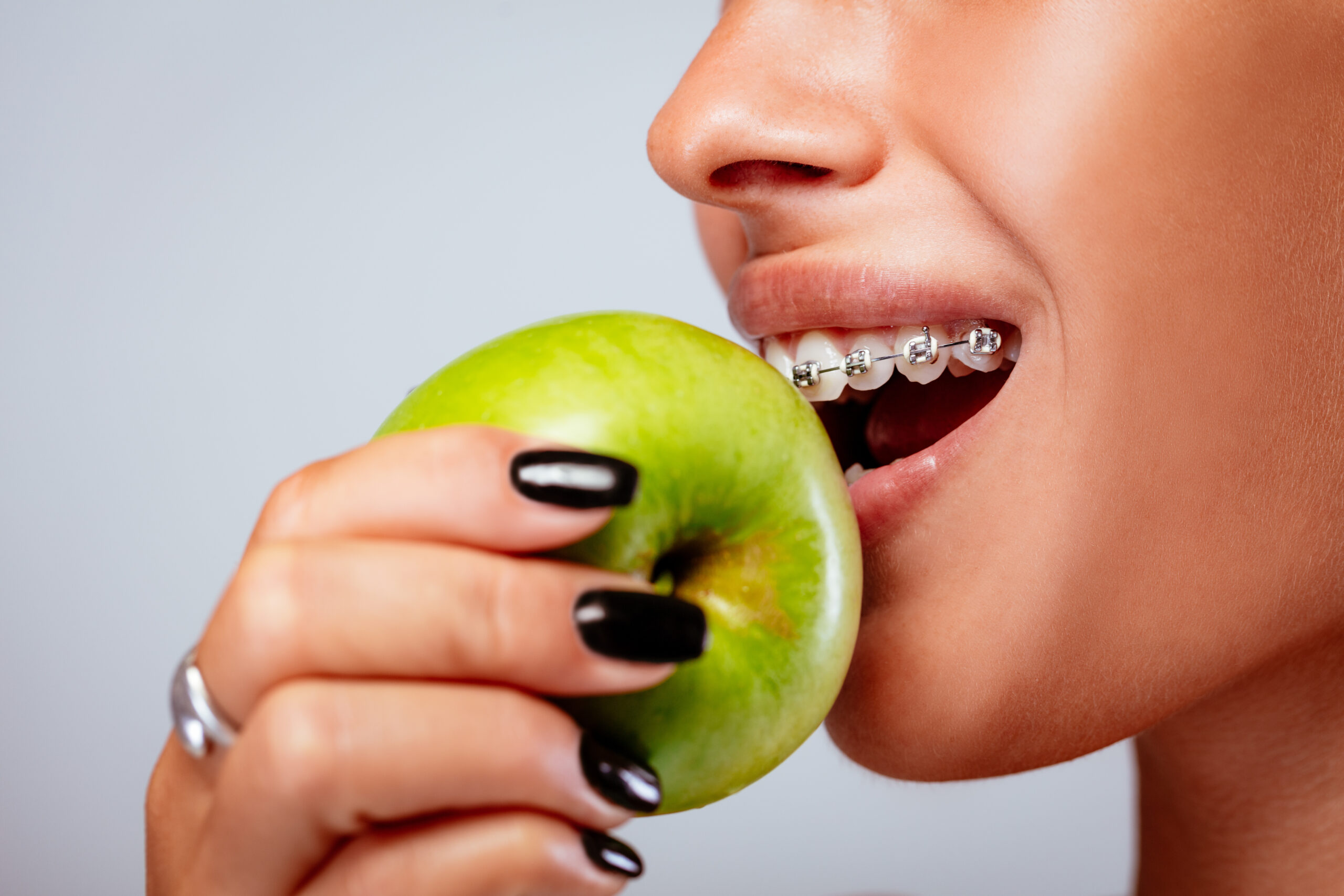
You should also avoid biting directly into hard fruits and vegetables. An apple, for example, can still be part of a braces-friendly diet if you slice it into smaller pieces rather than biting into the whole fruit. Similarly, carrots and other firm vegetables can often be prepared by cutting or cooking them until they are easier to chew.
And while it may seem harmless, chewing ice is especially risky. It is best to skip the crunch altogether.
Sticky and Chewy Foods
Sticky foods can cling to brackets and wires, making them difficult to remove. They may also pull on orthodontic components as you chew.
Caramel, taffy, chewing gum, gummy candy, and similar treats are best avoided during braces treatment. Sticky foods can be particularly troublesome because even when they don’t immediately break a bracket, they can leave behind residue that is difficult to clean.
If you have a sweet tooth, there are usually softer alternatives that can satisfy a craving without putting your braces at unnecessary risk.
Crunchy Snacks
Popcorn, chips, hard crackers, and similar snacks can cause problems for braces. Popcorn is especially tricky because the kernels and hulls can become lodged around brackets and wires.
You don’t necessarily have to eliminate every snack from your diet. Look for softer options and avoid foods that require you to bite down forcefully. If you’re unsure whether a particular food is safe, it’s better to ask your orthodontic team.
Tough Breads and Meats
Some foods are not necessarily hard but can still put excessive strain on braces because they require a lot of chewing. Tough cuts of meat, crusty bread, bagels, hard pizza crust, and similar foods fall into this category.
That doesn’t mean pizza or sandwiches are completely off the menu. Cutting them into smaller, manageable pieces can make them much easier to eat with braces. The same approach works for meat: choose tender cuts and cut them into bite-sized pieces instead of tearing into large portions.
What About Sugary Drinks?
Food isn’t the only thing to think about during orthodontic treatment. Sugary and acidic drinks can also make maintaining healthy teeth more difficult.
Soda, sports drinks, energy drinks, fruit drinks, and other sugary or acidic beverages can contribute to enamel damage and cavities. The American Association of Orthodontists recommends water as a better everyday choice during treatment.
If you do have a sugary drink occasionally, maintaining good brushing and flossing habits afterward is important. Remember that braces create additional areas where plaque and food particles can collect.
What Can You Eat With Braces?
There are still plenty of options available. Soft foods such as pasta, eggs, yogurt, oatmeal, soups, mashed potatoes, soft vegetables, fish, bananas, and other easy-to-chew foods can all fit into a braces-friendly diet.
Preparation makes a difference, too. Cut foods into smaller pieces, cook firm vegetables until they are softer, and avoid using your front teeth to bite into particularly hard foods.
After getting braces or having an adjustment, your teeth may feel tender for a few days. During this time, softer foods can make eating more comfortable while your mouth gets used to the changes.
What If You Accidentally Damage Your Braces?
Even if you’re careful, accidents can happen. If you notice a loose bracket, broken wire, or another problem with your braces, contact your orthodontist for guidance. Don’t try to fix the appliance yourself.
In the meantime, avoid foods that could make the problem worse. Depending on the situation, orthodontic wax can help with irritation until your orthodontic team can address the issue.
The goal isn’t to make eating stressful. It’s simply about protecting your investment in treatment and avoiding unnecessary interruptions.
Keep Your Braces—and Your Smile—on Track With Pagan Orthodontics
Knowing what foods to avoid with braces is one of the easiest ways to protect your appliances and support a smooth orthodontic treatment experience. With a little planning, you can still enjoy a wide variety of foods while making smart choices that protect your brackets, wires, and teeth.
If you’re considering braces or are already undergoing treatment, Pagan Orthodontics can help you understand how to care for your smile throughout the process. Dr. Justin Pagan provides personalized orthodontic care for patients in Edmonds and the surrounding area.
Whether you’re looking for an Edmonds orthodontist for yourself or your child, following your orthodontic team’s recommendations can make treatment easier and help you stay on course toward the smile you’re working to achieve.
